
FRICTION — Where reality begins to shift
What happens when the familiar begins to shift?
When a city is no longer a city, a landscape reveals itself as a model, or an ordinary tree transforms into a memory?
FRICTION brings together three artists who each, in their own way, work within this field of tension:
the space between what we think we see and what is actually there.
Pieter Walcarius, Maarten Caesens and Kathleen Ramboer begin with recognisable elements,
architecture, landscape, light, space, nature, yet refuse to treat them as fixed realities.
Their work emerges precisely where certainty begins to falter. It is within this friction that space opens up for imagination.
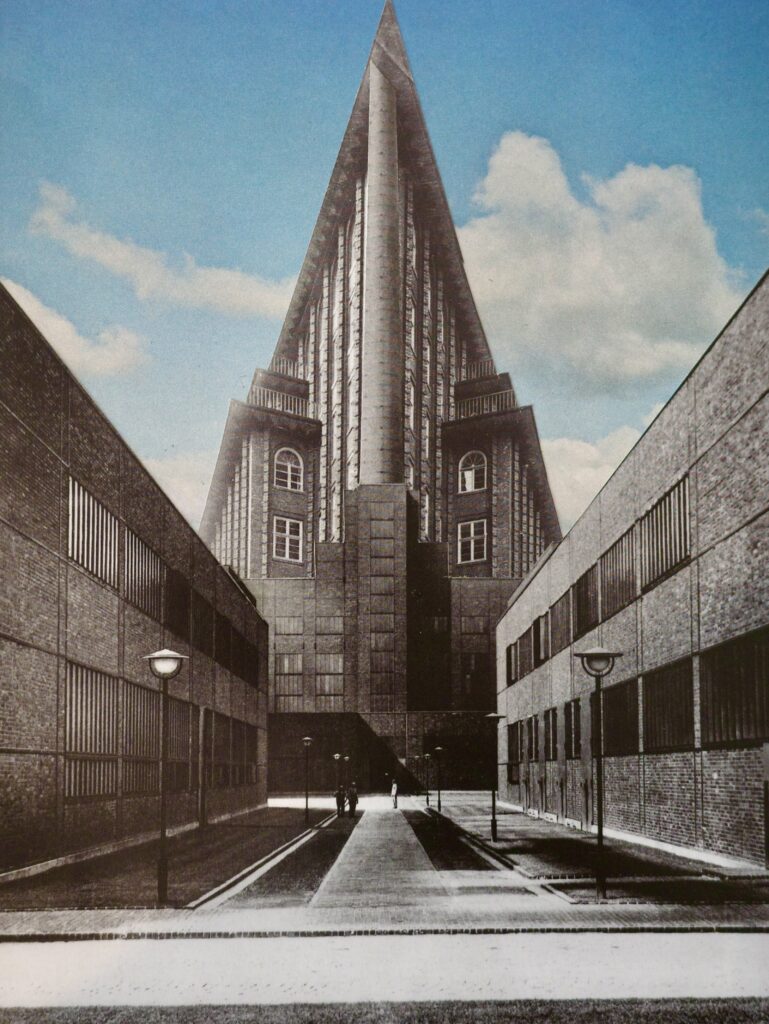
For Pieter Walcarius, this friction takes literal form in paper.
Using a scalpel, glue and fragments from old books and magazines, he constructs imaginary cities in which architecture loses its original function.
Buildings become forms, streets become lines, nature and geometry intertwine.
At first glance, his collages appear carefully ordered,
yet on closer inspection a world emerges that no longer obeys the logic of reality.
Walcarius moves between structure and intuition, between the familiar and the strange.
His slowly constructed paper universes invite us to wander, not in order to find a place,
but to lose ourselves in a new one.
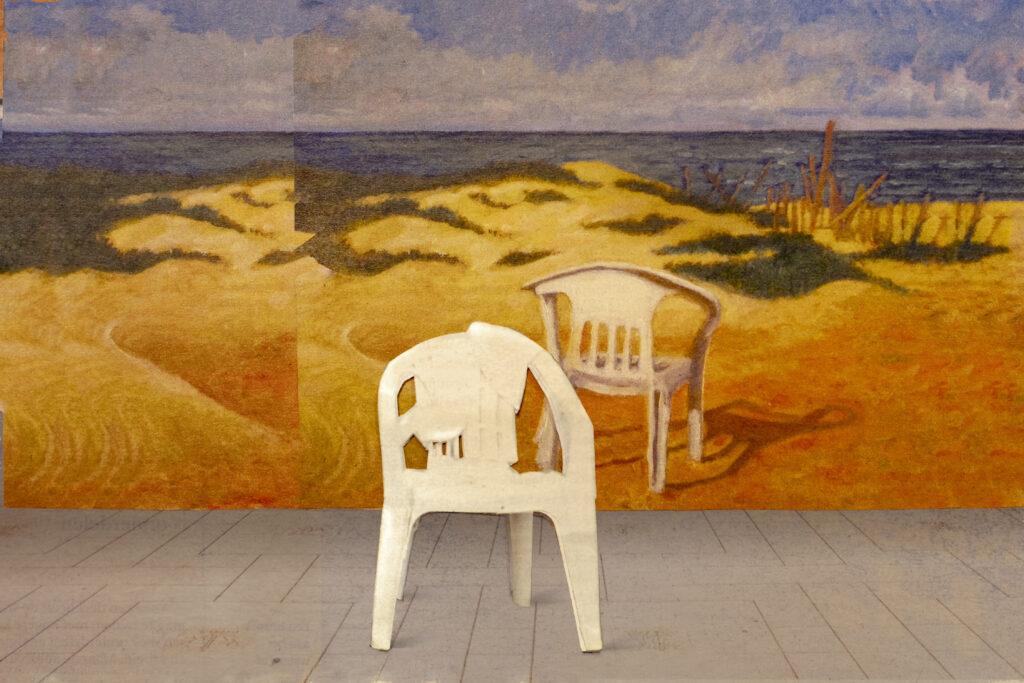
Maarten Caesens, turns looking into an unstable experience.
What initially appears to be a landscape may, upon a second glance, reveal itself as a model, a fragment or a construction. In his work, painting, photography and spatial interventions flow into one another.
The flat becomes spatial, the image becomes object, reality becomes interpretation.
Caesens reminds us that perception is never neutral: what we see is constantly shaped by
light, colour, context and expectation.
His images offer no definitive answer, but deliberately keep meaning in motion.
The viewer is not merely a spectator, but a co-creator, someone who is invited to look again, to doubt, and to reinterpret.
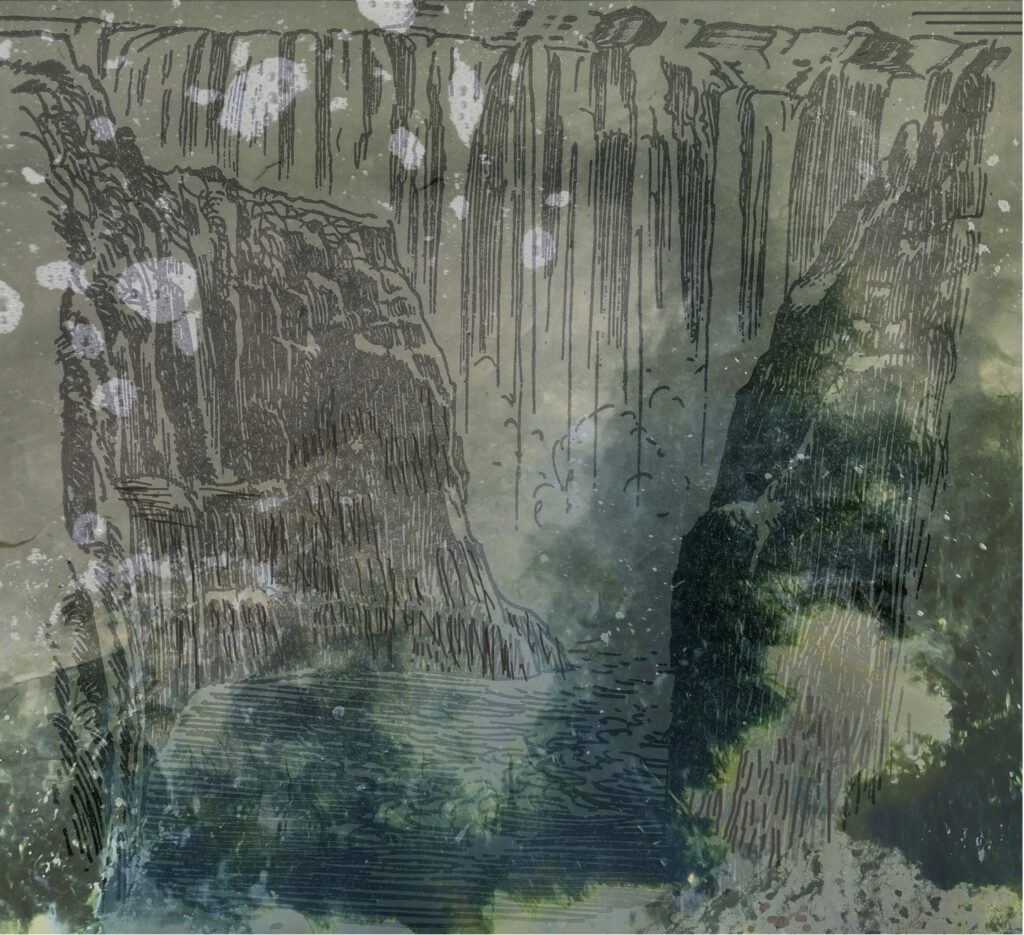
With Kathleen Ramboer, the friction is more subtle, emerging in the transition between photography and memory.
Her landscapes are not records of places, but mental landscapes: cinematic, still and at times almost mystical. Through her experimental photographic approach and digital manipulation, she transforms the everyday into something that feels both familiar and elusive.
A tree, a path or an open space becomes a vessel for silence, nostalgia and anticipation.
Her images sometimes seem to emerge from a vanished film, or from a memory whose details are slowly fading.
What is visible becomes merely a threshold to what remains unseen.
This is where these three artists meet.
Walcarius constructs a reality that does not exist.
Caesens undermines the reality we believe we know.
Ramboer recalls a reality that may never have fully existed.
Their media differ, their visual languages differ, their generations differ — and it is precisely this that gives the combination its strength. The friction exists not only within their individual works, but also between the works themselves. Paper against photography. Construction against memory. Geometry against atmosphere. The tangible against the mental.
And yet, they share a fundamental attitude: none of these artists takes the image at face value. They use the image as a site of investigation — a place where reality and imagination meet, collide and reshape one another.
FRICTION is therefore not about conflict, but about the creative tension that arises when two realities encounter one another. It is precisely within this tension that something new becomes visible.
The three artists do not ask us to look more quickly, but to stay longer. To let go of our first impression and make room for doubt, association and imagination.
Because perhaps art is not the answer to what we see.
Perhaps art begins precisely at the moment when we are no longer certain of what we are seeing.